What Batley Shop Owners Know About Storage
Find Out More →Walk past any of the retail units around Commercial Street or Staincliffe Road and you'll notice something: the successful ones don't look cluttered. Stock isn't piling up in corners. Seasonal items aren't gathering dust. That's not magic—it's just that local business owners have worked out how to use Self Storage Batley in a way that most homeowners haven't quite grasped yet. And honestly, the approach they use works just as well for a spare bedroom or garage as it does for a stockroom.
Why businesses treat storage differently
The difference starts with clarity. A shop owner knows exactly why they're paying for storage space—it's a business cost that either saves them money or makes them money. There's no vagueness about it. They're not storing things 'just in case' or 'because I might need it someday'. They're storing seasonal stock, overflow inventory, or stock for another location. That kind of focus changes everything about how you use the space.
Homeowners often use Self Storage like an extension of the attic—a place to shove things and forget about them. Businesses use it like a tool. They know what's in there, why it's there, and when they'll need it back. That distinction matters more than you'd think, especially when you're paying month after month for a unit.
How they organize (and why you should copy it)
Most local Batley businesses use the same organizing principle: everything gets labeled, dated, and logged. Stock goes into the unit with a record of what it is and when it went in. This sounds tedious, but it saves time and money. When you know exactly what you've stored, you don't end up buying duplicates. You don't lose things. You don't pay for space holding items you've forgotten about.
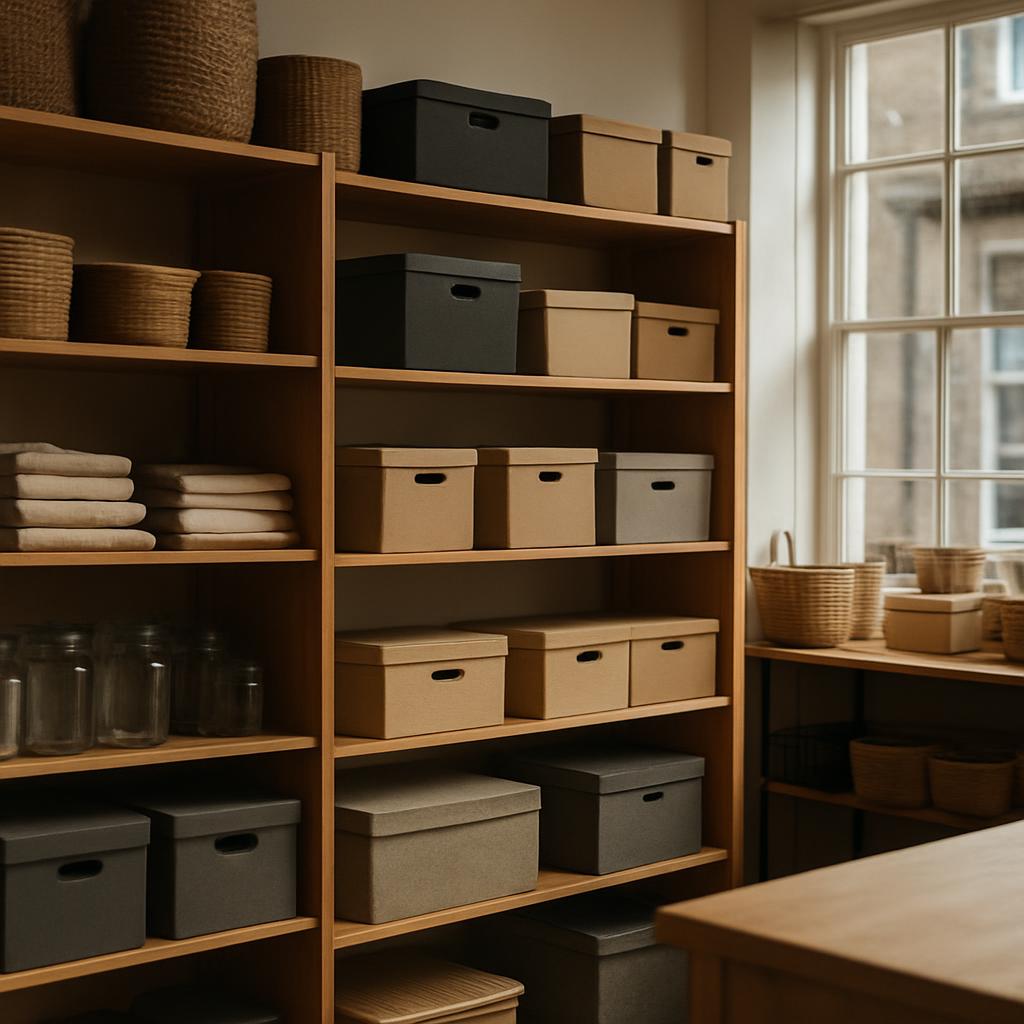
For households, that means treating your Self Storage unit like an inventory rather than a dumping ground. Take photos of what goes in. Keep a simple list or spreadsheet. Mark boxes clearly—not just 'miscellaneous' or 'stuff', but actual contents and the date. You don't need an elaborate system; even a basic one beats having a unit full of mystery boxes.
As we covered in this guide, the businesses that get the most from their storage space are the ones that know what they've got.
What they prioritize and what's actually worth storing
Here's where business owners' thinking diverges sharply from most households. They don't store things out of guilt. They store things because they have a concrete plan to use them. Seasonal stock gets stored because it'll sell in six months. Overflow gets stored because the main space isn't big enough right now. Stock for a secondary location gets stored because it's genuinely needed elsewhere.
Homeowners often store things because throwing them away feels wasteful, even when there's no real plan to use them again. Old furniture 'in case it comes back in style'. Clothes 'because I might fit into them'. Kitchen gadgets 'because someone might visit who needs them'. The cost of storing these things—month after month—is usually higher than the cost of replacing them when (or if) you actually need them.
This is where Self Storage Batley becomes genuinely useful rather than just convenient. Use it for things with a timeline: Christmas decorations, garden furniture for winter, kids' items you're saving for the next child, furniture while you're renovating. Use it for things you actively expect to retrieve and use again within a set period. Don't use it as a way to delay throwing things away.
This article explains how that forward-thinking approach actually reduces the total amount of storage you need.
The money side (how businesses keep costs down)
Because business owners are tracking what's stored and why, they're ruthless about clearing out things they're not using. If stock isn't moving after a set period, it goes. If overflow space isn't needed anymore, the unit gets cancelled. There's no sentiment involved—if it's not earning its keep or serving an active purpose, it's gone.
That's the bit worth copying directly. You're paying for every month your unit sits there. Even a small unit adds up over a year. If you store something for 18 months planning to use it 'sometime', you've paid a lot of money for that privilege. Businesses avoid this by setting review dates: every three months, check the unit. Every six months, decide whether what's in there still makes sense. If it doesn't, clear it out.
Read more here on practical ways to make your storage unit work harder and cost less.
The real takeaway
What separates business storage from household storage isn't the unit itself—it's the attitude. Businesses use Self Storage as a means to an end. Homeowners often use it as an alternative to making decisions. The moment you flip that around and treat your unit like businesses do—with clarity, organization, and a real purpose—the money starts making sense.
You don't need to be running a shop on Commercial Street to think like one. If you're in Batley and you're considering Self Storage, start by asking yourself the same questions business owners ask: What am I storing? Why? When will I need it? How much is it costing me per month? If you can't answer those clearly, the storage isn't worth paying for.
Ready to store smarter? Self Storage Batley is here to help you do it the right way. Get in touch and let's find a unit that actually serves your needs—not just your guilt.
Looking for Self Storage near Batley?
We have secure, flexible units available in the area. Get in touch with Self Storage Batley today.
Find Out More →